Loading

Most homeowners have never seen the inside of their dryer duct, and neither has anyone else. General home inspections rarely go past the vent hood. That means a run can be crushed behind drywall, disconnected in a crawlspace, or venting straight into an attic for years without anyone knowing — until the drywall stains or the dryer overheats.
We push a borescope through the full run and document every joint, elbow, and penetration. The report flags the specific problems with photo evidence: plastic or foil flex duct, sheet-metal screws penetrating the airway, runs that exceed the code-allowable length, missing or screened terminations, backdraft dampers that no longer seal, and connections that were never sealed at all. Each finding is tied to the IRC or IMC section it violates.
You get a written summary you can hand to a realtor, buyer, insurer, HOA, or property manager — and a flat-fee quote for any repair we recommend, with no obligation to have us do it.
not sure? just ask.
Describe your setup on the phone and we'll tell you honestly which service you need — even when the answer is none of them.
These are real findings from Dayton-area homes — the kind of thing a general home inspection never reaches, and the reason the report comes with photos instead of a checkbox.
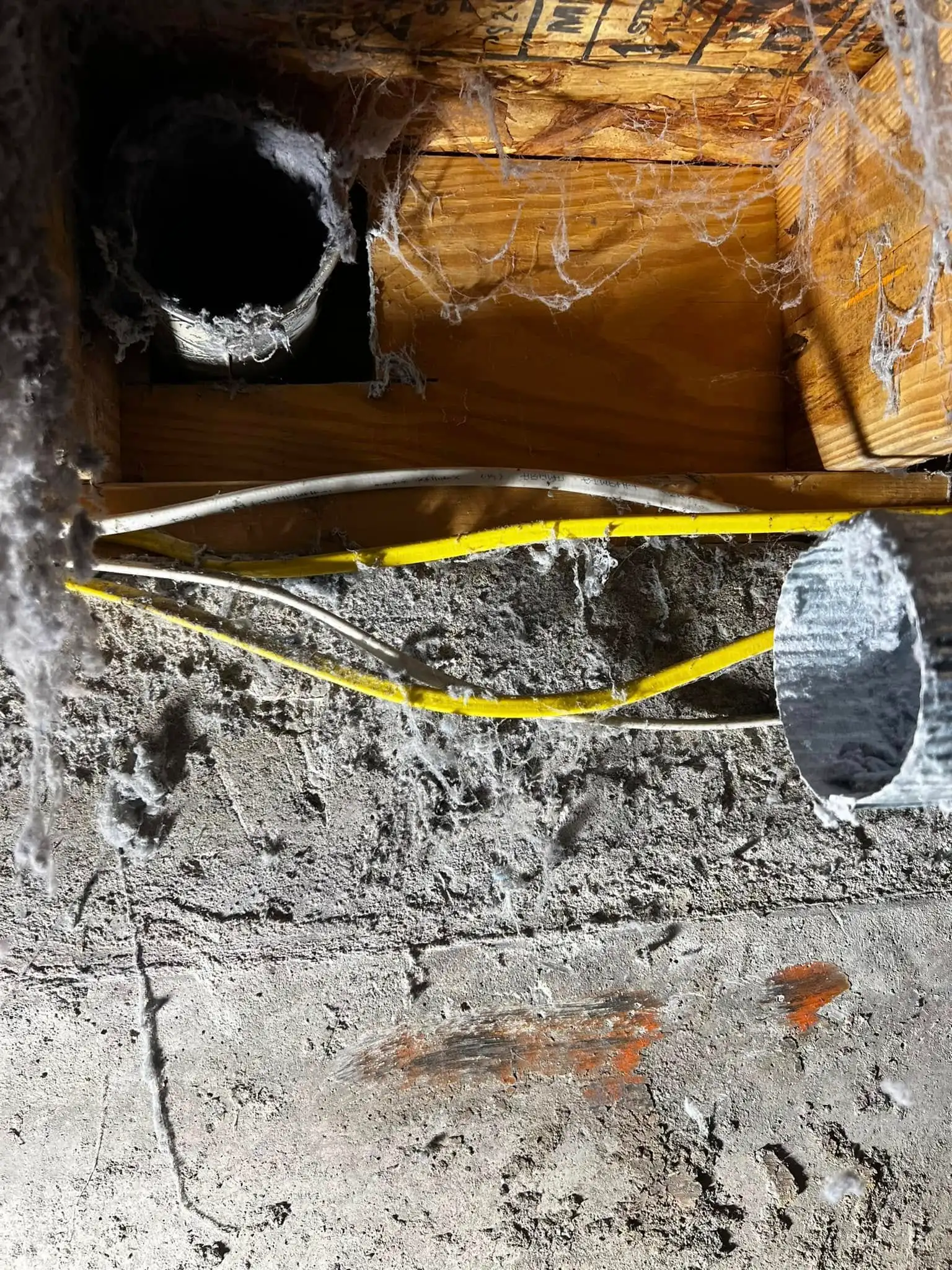
An unsealed duct penetration coated in lint, with wiring run right through it. Documented, photographed, and quoted for repair the same visit.
Pull the exterior cover and the story shows: a split, lint-caked termination venting into the wall cavity and insulation instead of outdoors.
Chicken wire over the termination — a common DIY "fix" that code prohibits. Lint catches on the mesh until the damper can't open and the run backs up.
Warm lint makes ideal nesting material. When the damper stops sealing, mice move in — and the whole run becomes a blockage you can't see from either end.
We quote a flat price per home instead of an hourly rate, so you know the number before we start. Three things move it:
Longer runs and finished-basement routes take more time to document properly.
Multi-unit and multi-dryer buildings are quoted per unit at a reduced per-vent rate.
A standard photo report is included; realtor or insurer packets with code citations take longer.
Anything not covered here, ask on the phone — we'd rather answer it than have you guess.