Loading

A dryer moves hot, wet air. When the duct carrying it leaks into a wall cavity, crawlspace, or attic, that moisture condenses on framing and insulation — and mold follows. We find leaks behind laundry rooms in Kettering ranches, Dayton doubles, and finished basements all over the Miami Valley, usually where flex duct was crushed behind the dryer or a joint was never sealed.
We replace failed sections with rigid galvanized duct, seal joints with foil tape and clamps instead of screws driven through the airway, and support the run properly so it can't sag and collect lint. Where the original route is the real problem — a run that snakes 35 feet with five elbows because that's where the hole already was — we plan a shorter path with fewer turns, which cuts dry times permanently.
Every repair is quoted flat before any work starts, and we photograph the failure and the finished work so you can see exactly what changed inside the wall.
not sure? just ask.
Describe your setup on the phone and we'll tell you honestly which service you need — even when the answer is none of them.
Foil flex, tape-patched joints, and crushed sections come out. What goes back in is supported rigid duct with sealed connections and a shorter path.
Foil flex, mismatched sections, and joints held together with tape — pulled from one home's run. Every ridge in that flex is a place lint stops moving.
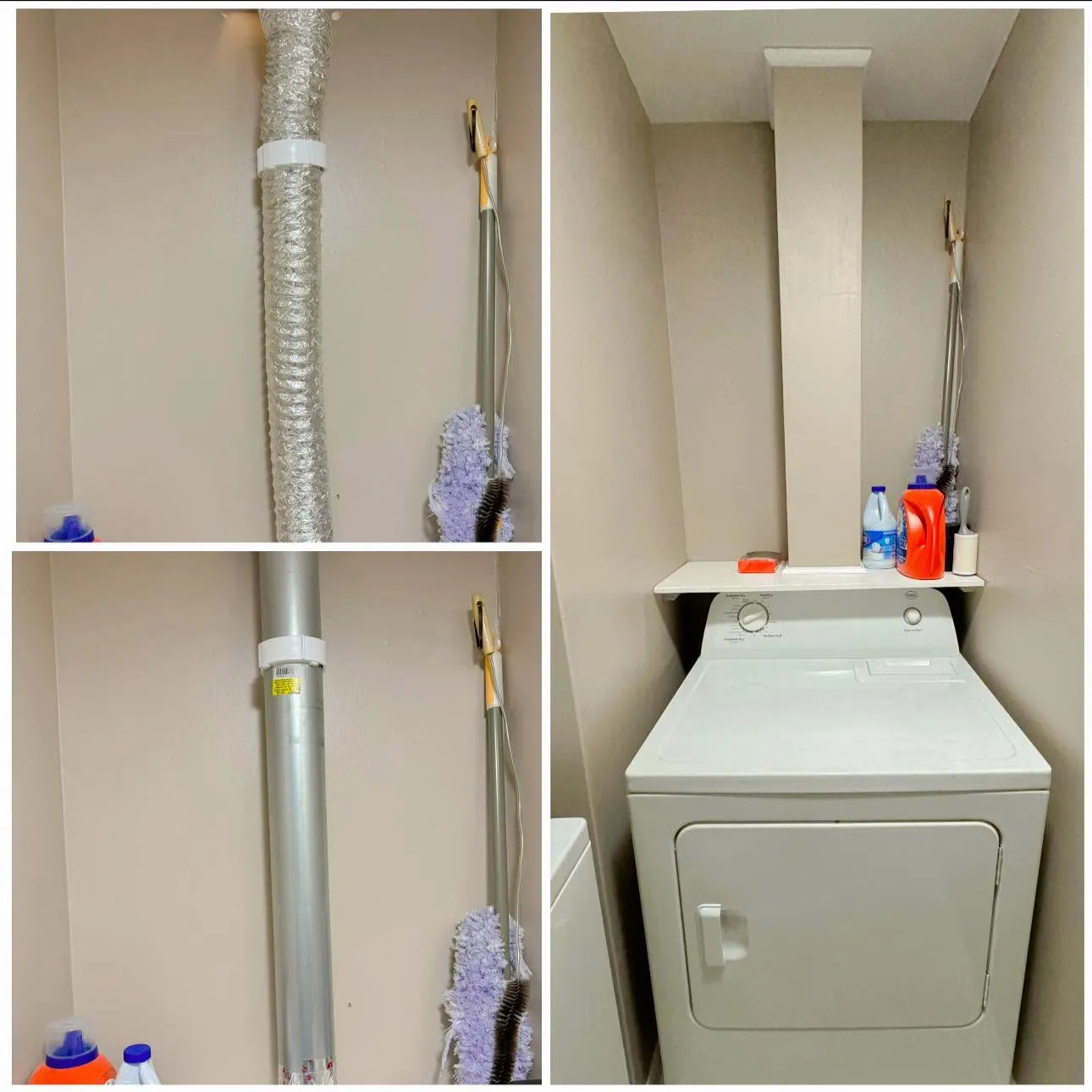
The same laundry room, all three angles: the old foil flex, the rigid pipe that replaced it, and the finished run boxed in behind the dryer.
We quote a flat price per home instead of an hourly rate, so you know the number before we start. Three things move it:
Replacing a single crushed section is quick; rebuilding a full run takes most of a day.
Open basements are straightforward; finished ceilings and tight crawlspaces add labor.
A shorter new path costs more up front and pays back in dry times and energy use.
Anything not covered here, ask on the phone — we'd rather answer it than have you guess.